Teach Great Lakes geography with maps of the region. Kids will label the lakes, as well as surrounding states, provinces, and cities. They’ll learn to spell them too! (more…)
Water science experiments engage students in hydrology. For some fun, educational activities, let kids explore the hydrosphere, properties of water, the water cycle, waves, currents, and nutrient pollution. (more…)
Eutrophication is water pollution caused by excess nutrients. For example, water in the Great Lakes was originally cool and clear. In other words, few biological materials (such as algae) lived…
Thinking about teaching ocean currents? You can take a deep dive in just five lessons. First, students read a short passage and watch a video. Then they explore tides. Two…
Engage kids with ocean waves models and a STEM activity. They’ll love exploring four prototypes to discover which best simulates a transverse wave. (more…)
Teaching the water cycle is easy. Just use a solid learning cycle – instruction and inquiry, practice, and assessment. Your students will love the baggie project. You’ll love their mastery…
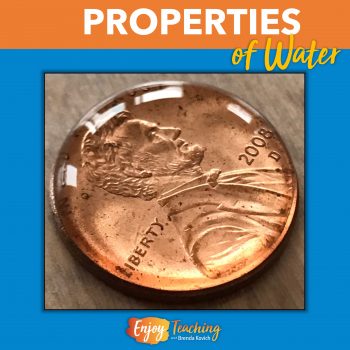
Looking for properties of water lesson plans? A few simple activities can drive home important science concepts like evaporation, cohesion, adhesion, water as a solvent, and capillary action. Read on…
Introduce the hydrosphere with three types of interdisciplinary activities. First, ask kids to read and answer questions. Second, have them create pie graphs to show how water on Earth is…
The teaching struggle. If you’re a teacher, you know what it’s all about. Every day, when you get up in front of your class, you struggle to make them understand,…
Maximize instructional time in the classroom with these clever strategies. Then, when you get up in front of your students, you’ll be teaching more than just your current lesson. First,…