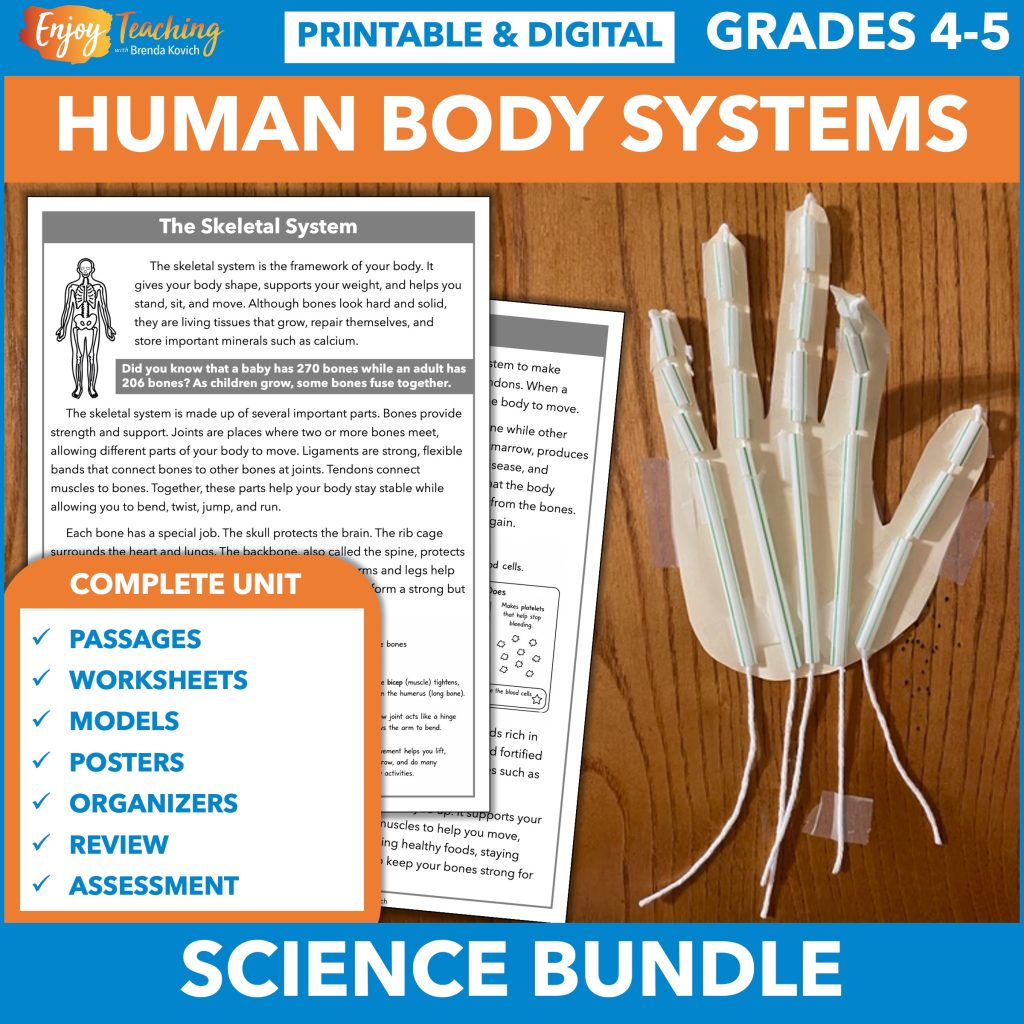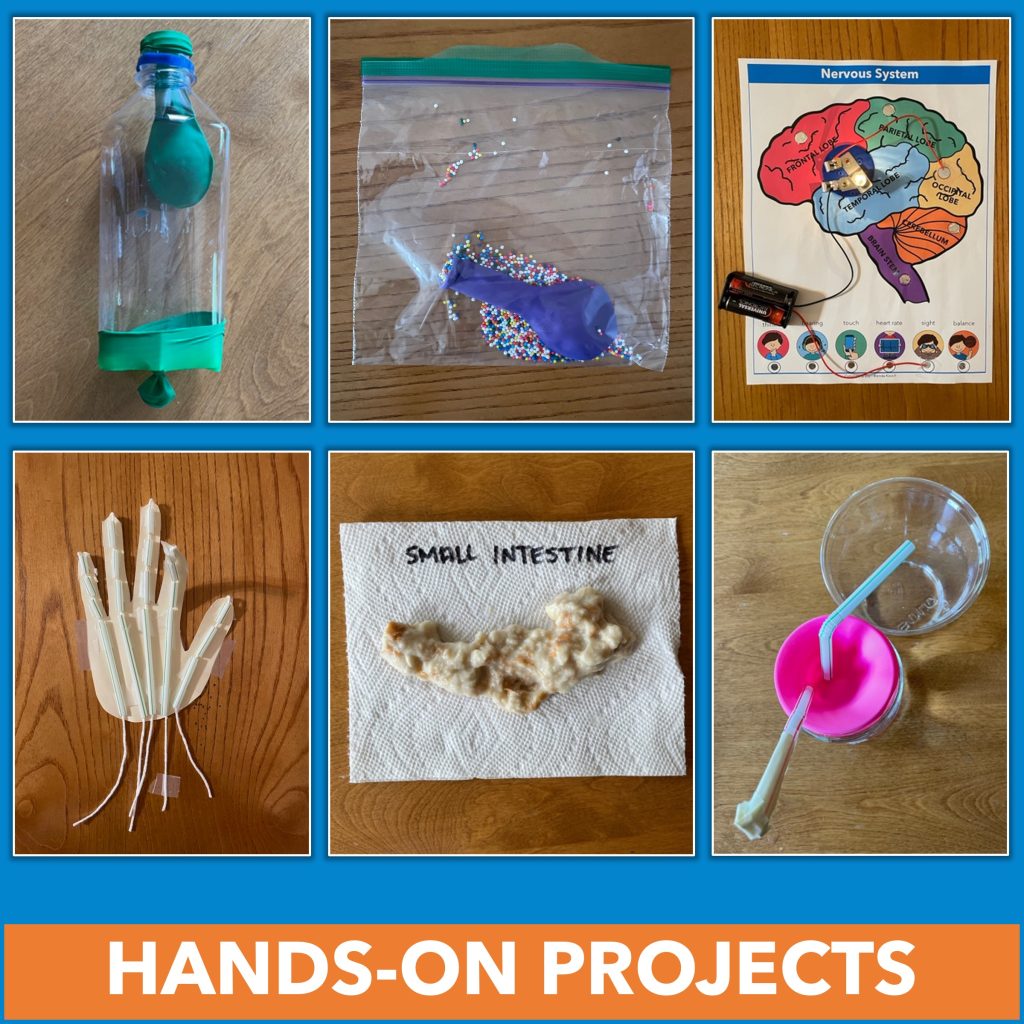
Wondering how to build an immune system model in your classroom? Try this simple analogy. Then follow up with an information sheet and graphic organizer. They make body systems as easy as 1-2-3!

Posts on this website follow a teaching journey and are written in story form.
Ms. Sneed Teaches the Immune System
After school, Ms. Sneed’s teaching partner walked in the door of her classroom. As usual, he sat down at the side table. Then he pulled out his laptop and turned it on.
“Ready to build more body systems models?” asked Mr. Frank.
“You betcha. Time to plan for the immune system.”
Building a Model of the Immune System
“First,” Mr. Frank said, “let’s try building the immune system model.” He pulled up the directions.
As her teaching partner read them off the materials, Ms. Sneed pulled the materials out of her cabinet:
- balloons
- zip-top baggies
- candy sprinkles or other grainy substance
- petroleum jelly
- Q-tips
- scissors
“Okay, we’re ready to try it,” said Mr. Frank.
“Before getting into what happens inside the body, we’ll talk to the kids about their first line of defense. The balloon represents your skin. It keeps germs from getting into the inside of your body. The opening represents your nose and mouth.
“The first thing they’ll do is to rub the the balloon opening with petroleum. This represents mucus, which traps germs that are trying to get in.”
Ms. Sneed picked up a Q-tip and rubbed petroleum jelly on the inside and outside of the balloon opening.
“Okay,” said Mr. Frank. “Now they’ll put some sprinkles inside the baggie. And throw the balloon in too. Finally, seal the baggie and shake.”
“So,” Ms. Sneed said as she shook the baggie, “I’m assuming that the sprinkles are germs.”
“Yep. Now it’s time to take the balloon out and see what entered the body.”
As Ms. Sneed pulled the balloon out of the baggie, Mr. Frank continued, “Just cut the balloon open.”
The two teachers stared at their model. Only one or two sprinkles had entered the balloon. “Hey,” said Ms. Sneed, “I expected more! Obviously, the first line of defense does a good job.”

Learning About the Immune System
“After this activity,” said Ms. Sneed, “kids need to learn what happens inside the body.”
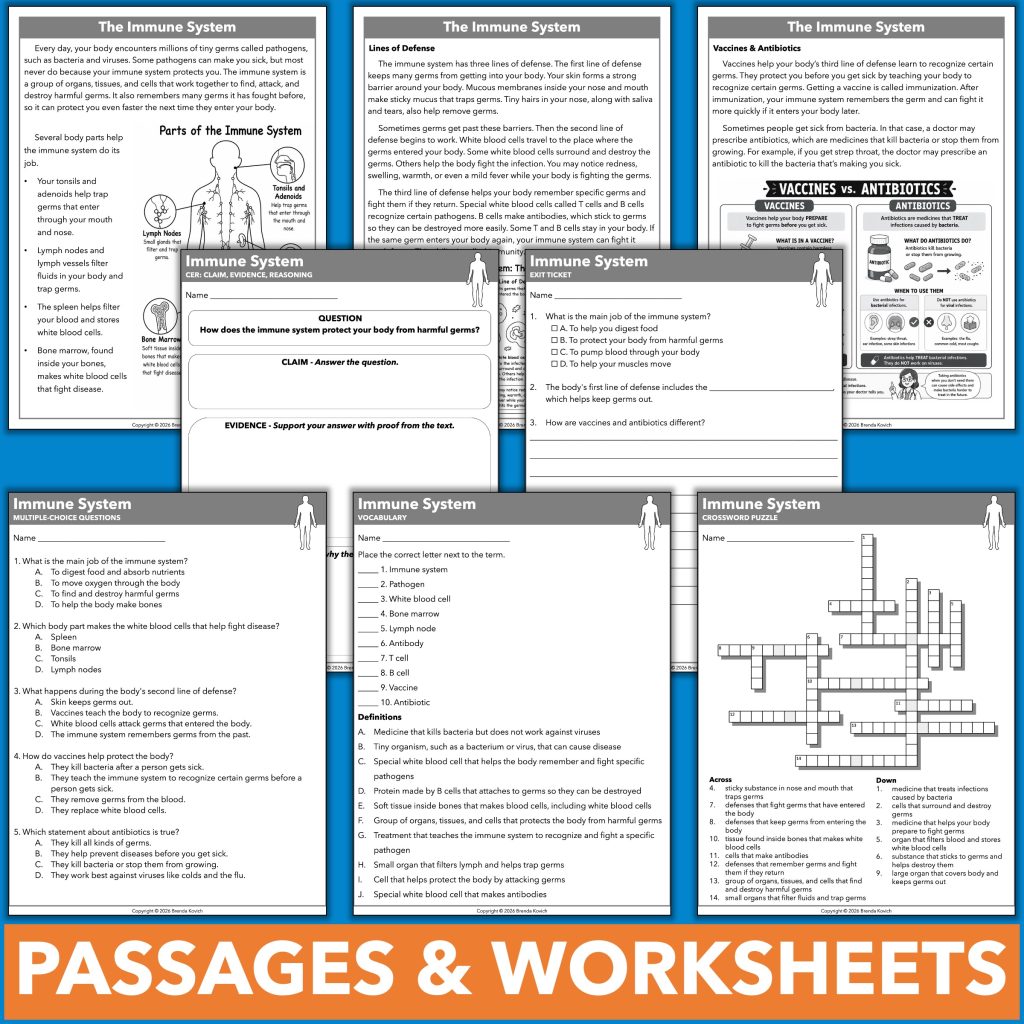
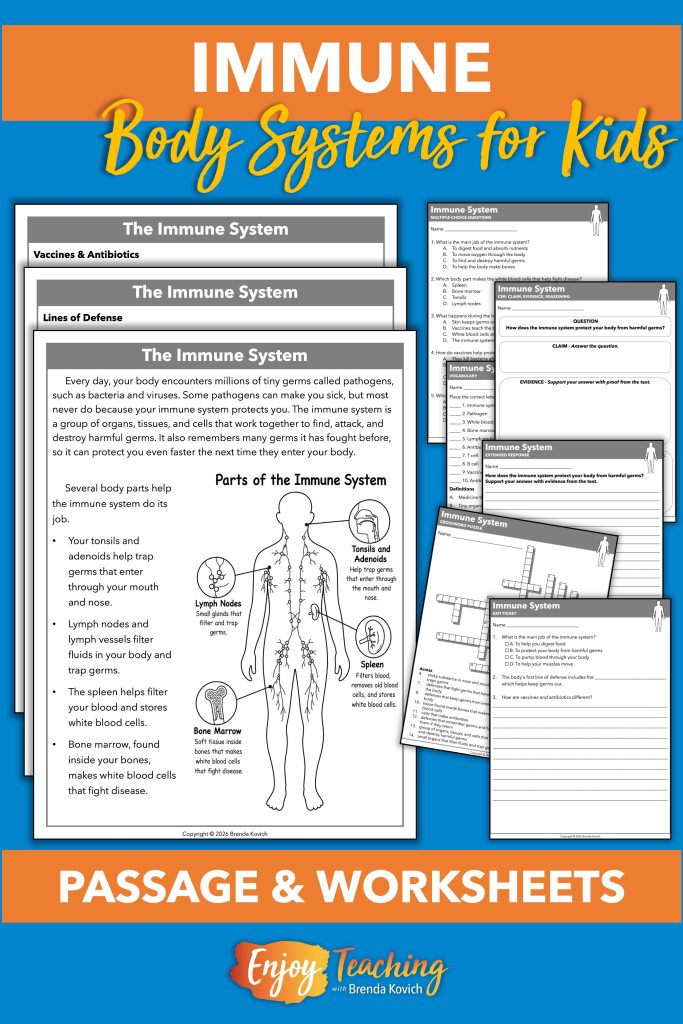
Mr. Frank scrolled through their body systems unit. Soon he the immune system file. “This has a three-page informational text,” he said. “And it’s differentiated for two reading levels.”
Ms. Sneed took a look. “Great,” she said. “Are there any worksheets?”
“Yep. As a matter of fact, multiple-choice questions, a CER chart, an open-ended response, a vocabulary worksheet, a crossword puzzle, and an exit ticket are included. It’s everything we need to cover the immune system and reinforce reading skills.”
Reinforcing What They’ve Learned
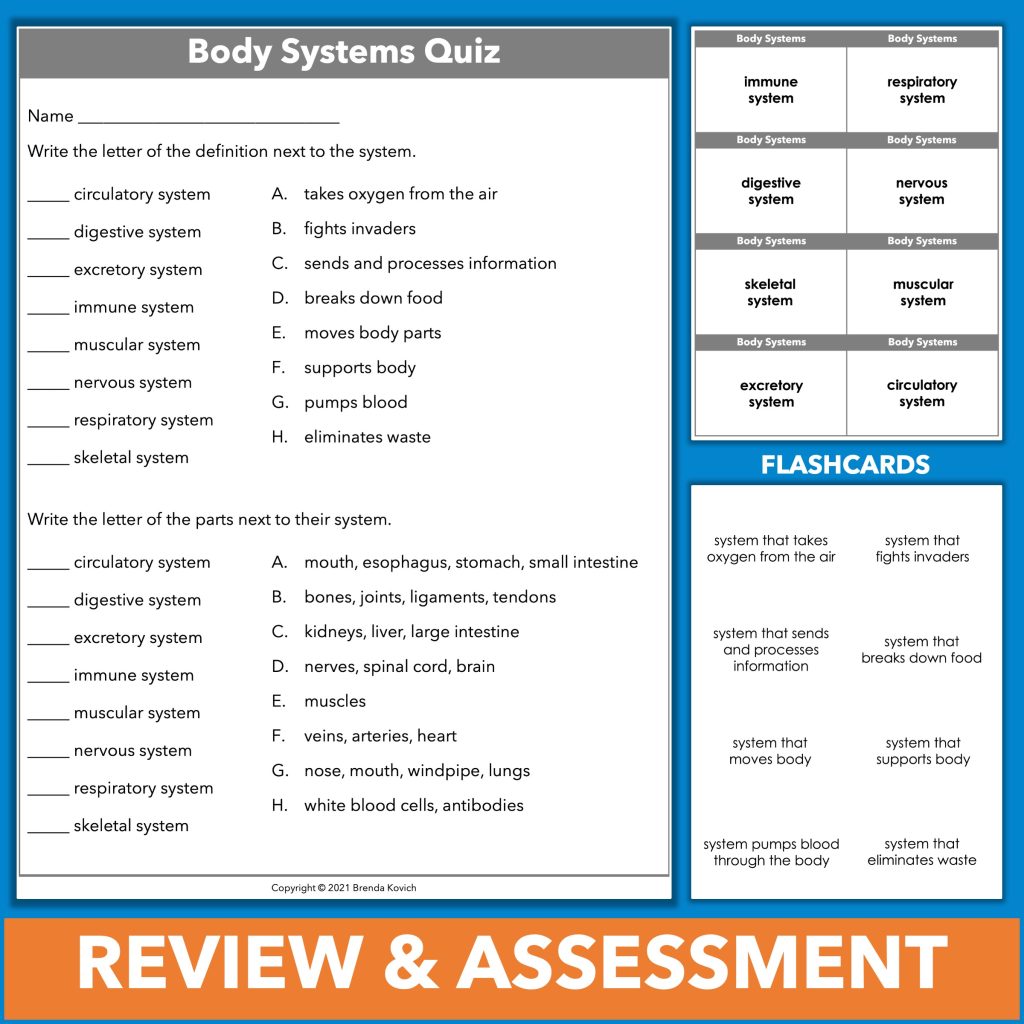
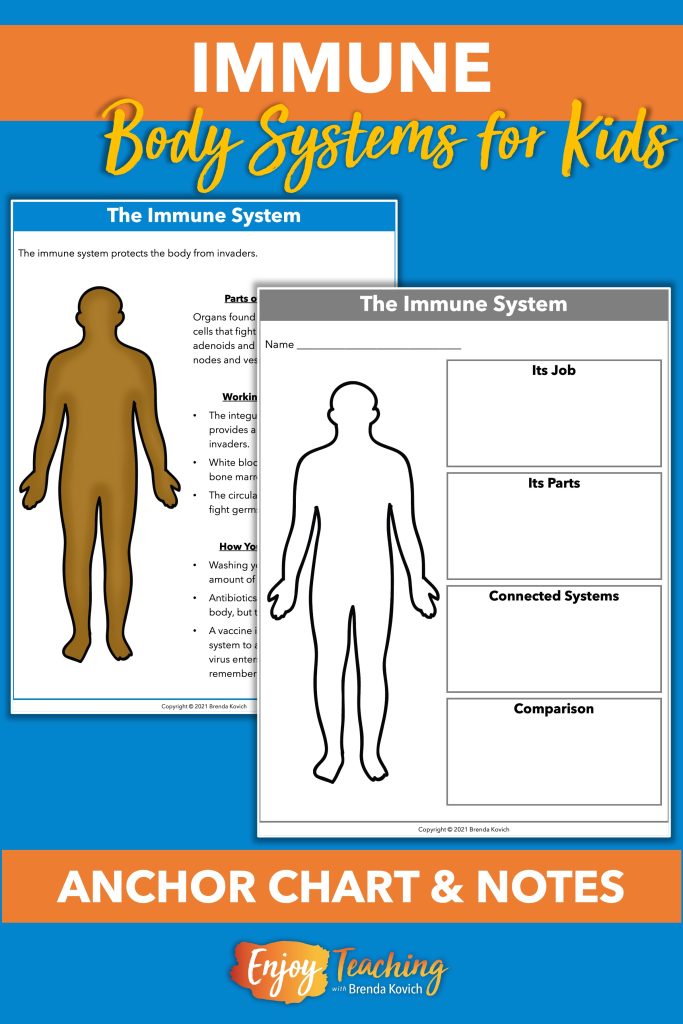
Mr. Frank scrolled to another part of the body systems unit. “Additionally, the bundle offers a reference guide that can be used as a study page or anchor chart. A variety of graphic organizers ask kids to explain the immune system,” he said. “I particularly like this one. It asks them to tell about its job and parts. Additionally, they compare it with everyday items.”
“What do you think they’ll compare the immune system to?” Ms. Sneed asked.
“Well, the white blood cells do remind me of Pac Man. And the skin is like armor. Who knows what the kids will come up with!”
Enjoy Teaching Body Systems
Ms. Sneed smiled. When kids used divergent thinking, she enjoyed teaching a little more. She couldn’t wait to add these immune system activities to her life science unit. The kids would absolutely love it! Now to find some cool models for the circulatory, digestive, musculoskeletal, nervous, and respiratory systems…
Why not bring some active learning into your class? They’re sure to engage your students – and you!