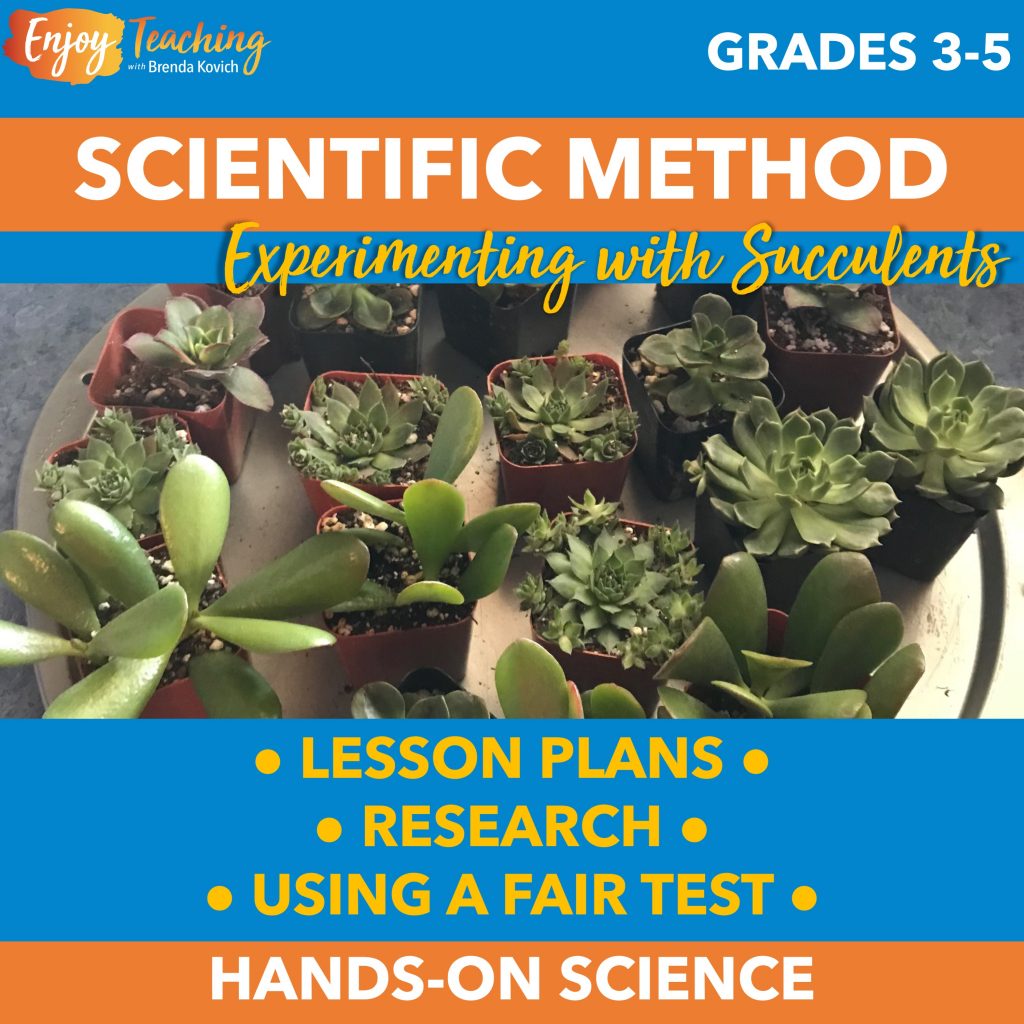
Succulent science activities bring fun and excitement to the classroom. Take a few simple steps to get started. First, teach the science practices. Emphasize using a fair test. Next, ask kids to consider one variable to study. Finally, bring in the plants. Your students will love this long-term science activity.
Posts on this website follow a teaching journey and are written in story form.
Ms. Sneed Considers Succulent Science
Last summer, our favorite fourth grade teacher threw a bridal shower for her sister. What would she use for favors? “Everyone’s wild about succulents this year,” Ms. Sneed thought. She searched the Internet for ideas. Surprisingly, she could order the plants, soil, and containers on Amazon.com. When everything arrived, she transplanted the succulents.
“I wonder if I could keep one of these little puppies alive,” Ms. Sneed thought. She decided to plant the extras and try a little succulent science.
After a few months, certain succulents seemed to be doing better than others. Ms. Sneed started to think about growing conditions for succulents. “Hmm, she thought, this reminds me of my class. We’ve been learning about the science practices. I wonder if my students could grow succulents to apply their knowledge of the fair test.”

Ms. Sneed Uses Succulent Science to Reinforce the Scientific Method
“Okay, class, time to get started,” said Ms. Sneed. “Today we’re going to review the scientific method. Can anyone remember the steps?”
A student in the back raised his hand. “The process starts with a question.”
Another child added, “You have to control the variables.”
Ms. Sneed listed the information they offered as a set of steps:
- Ask a question.
- Generate a hypothesis.
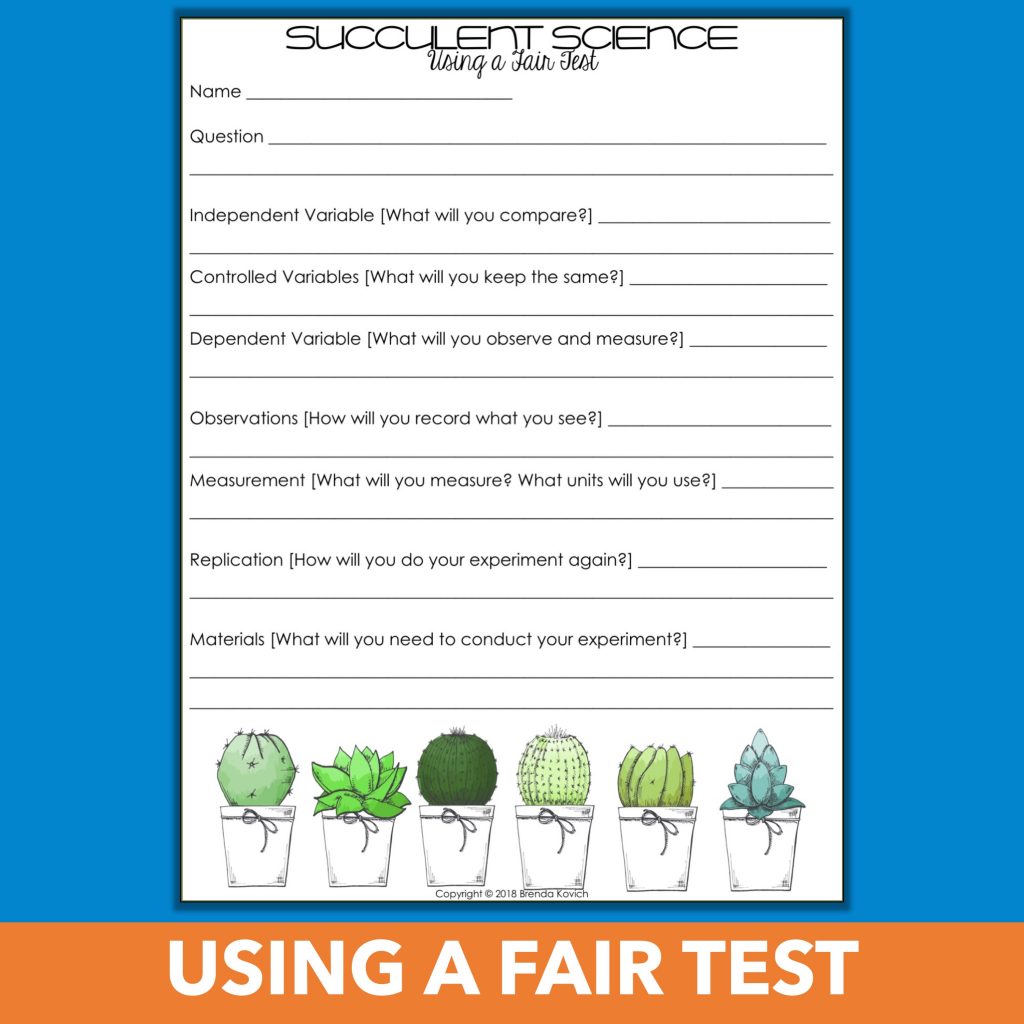
- Set up an experiment using the fair test. (Compare. Control variables. Measure. Replicate.)
- Make observations.
- Analyze results.
- Draw conclusions.
“Yes,” said Ms. Sneed, “this is a good list. Remember, scientific processes are somewhat flexible. And this year we’re really focusing on the fair test.
“I’ve been thinking. We should set up a long-term experiment of our own. I’m trying to grow some succulents at home. Some are doing well. Others aren’t. Maybe you can help me figure out which conditions are best.
“Next week, each lab group will get two plants and try a little succulent science. We’ll figure this out using the fair test.”
The students couldn’t sit still another minute. Before Ms. Sneed could say another word, they were up and talking to members of their lab groups. “Oh well,” thought Ms. Sneed. “I was almost done teaching. And I’m glad they’re so excited about the project.” Then she smiled to herself.
Setting the Stage
“What is a succulent?” Ms. Sneed asked her class the next day. Students offered some ideas, but no one knew for sure.
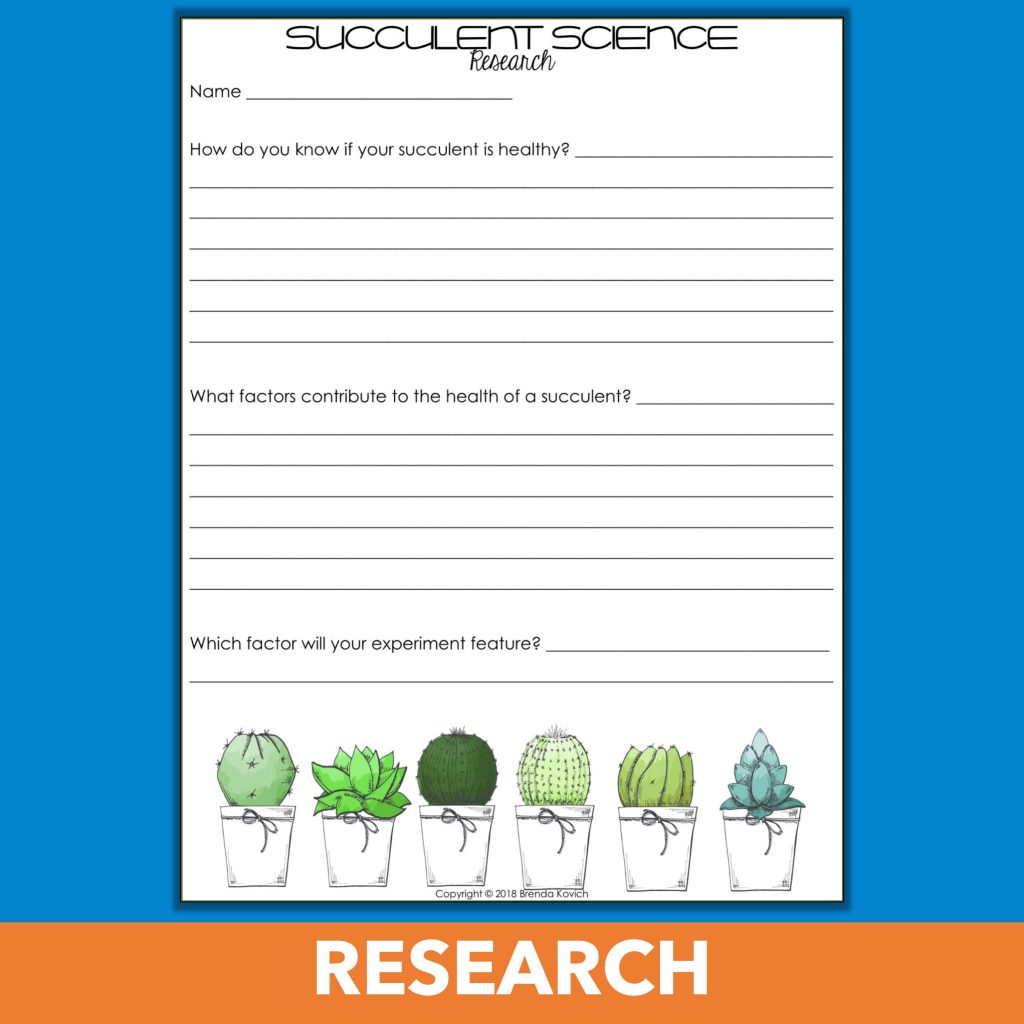
“When we do our experiments, how will we know if the succulent is healthy?” Again, the students were uncertain.
“Before we begin our succulent science activities, you need to do a little research.” Ms. Sneed handed out these research sheets, and the kids got busy.

Designing a Fair Test
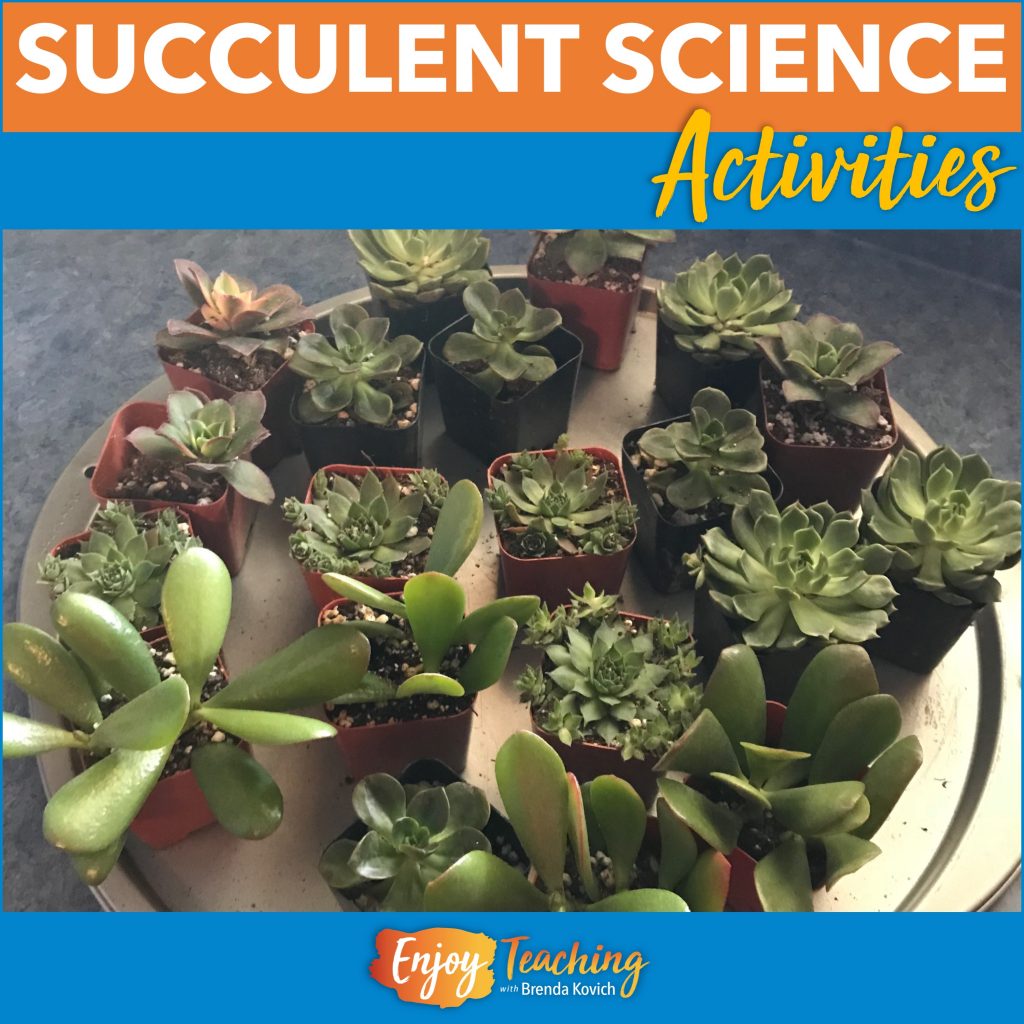
The next day, Ms. Sneed brought in two trays of succulents. Everyone gathered around and chattered excitedly.
“Unfortunately,” said Ms. Sneed, “we’re still not ready to begin. Each group must design a fair test. Your sheet must be approved by me – and you need to bring in any extra materials you need.”

Enjoying a Long-Term Science Experiment
After a few weeks, some succulents were thriving. Others didn’t look so great. The kids were learning about succulents – and about science. Surprisingly, sometimes the controlled variables caused succulents to die.
“In science, it’s okay to fail,” said Ms. Sneed. “That’s how we learn. If any of you would like to change your experimental design, let me know. We’ll make note of what’s happened so far. And we’ll write a new plan.”
Succulent Science Activities Are Just the Start
As Ms. Sneed knows, learning about scientific processes is messy business. It’s also a year-long endeavor. “I wonder if other plants have the same needs?” asks a girl at the second table. Ms. Sneed’s brain starts churning. She smiles to herself, considering her class’s next experiment.
Energize science activities in your classroom! In addition to designing a fair test, kids can also make generalizations, use inquiry, and incorporate STEM.