Learn how to build a circulatory system model with kids. For this this DIY activity, you’ll need a glass jar, balloon, flexible straws, and a cup. When you add an informative article and graphic order, your class will be set!

Posts on this website follow a teaching journey and are written in story form.
Ms. Sneed Teaches the Circulatory System
Our favorite fourth grade teacher surfed the Internet.
“What are you looking for?” asked her teaching partner.
“During our next life science unit, I’d like them to build scientific models.”
“Great idea,” said Mr. Frank. “The NGSS engineering and science practices suggest models. Furthermore, they’ll help our kids conceptualize human anatomy.”
With that, headed to Pinterest. “Let’s see, we’d like students to build their own body systems models. First up, the circulatory system.”
As she clicked, a bunch of ideas popped up.
Building a Model of the Circulatory System
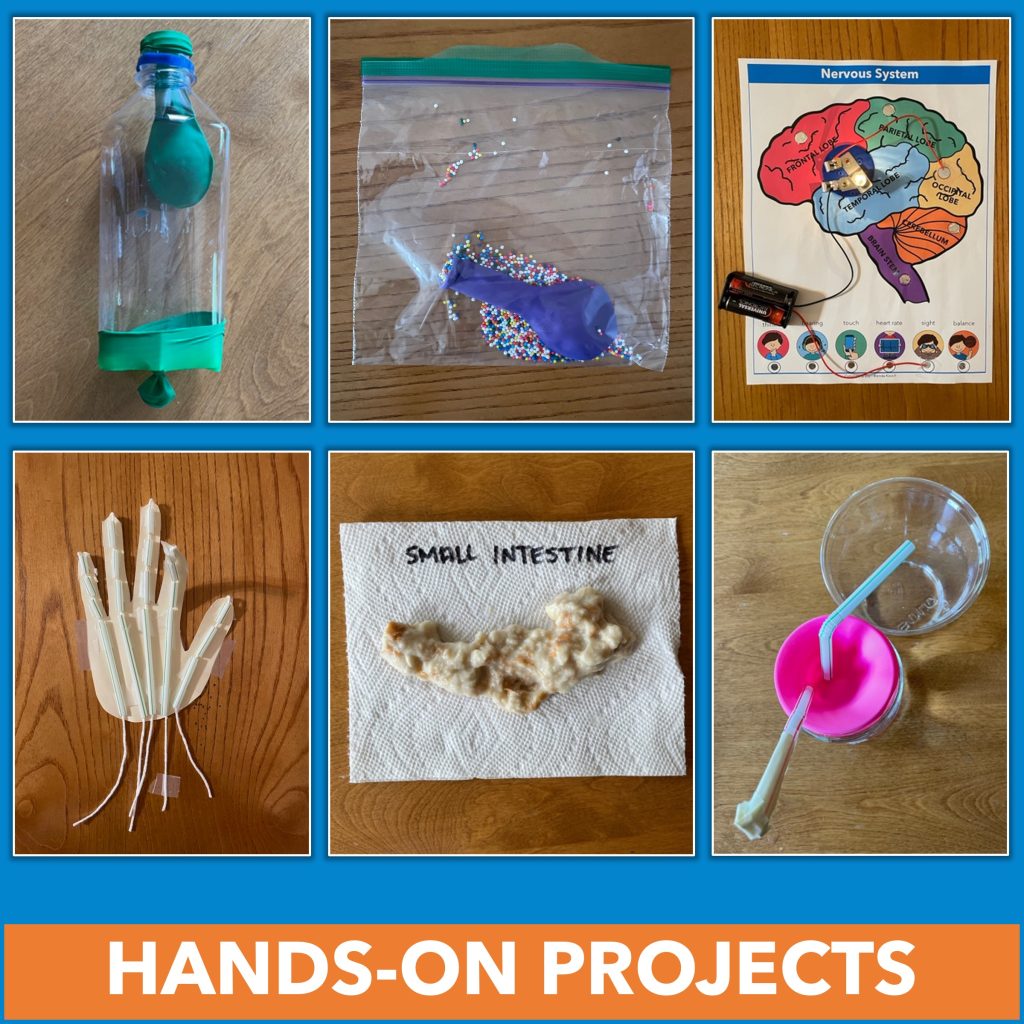
“Eureka!” Ms. Sneed exclaimed. “Many of these circulatory system models are similar. Let’s try to build our own pumping heart.”
First, they gathered the materials:
- a balloon
- scissors
- masking tape
- a jar
- two bendable straws
- a low plastic cup
Next, they snipped the narrow end of the balloon off. Then they filled the jar almost full with water. After cutting two tiny holes in the top of the balloon, Ms. Sneed stretched it across the mouth of the jar.
Now the teachers covered one end of one straw with masking tape. Carefully, they stuck one straw in each tiny hole. After setting the plastic cup beneath the opening of the second straw, they pointed it downward.
“Time to try it out!” Mr. Frank said. As he pressed down on the balloon, the “heart” began to pump water.
Ms. Sneed grinned. “Voila!”

Learning About the Circulatory System
“After our kids understand the pumping action of the heart,” said Ms. Sneed, “they need to learn more.”
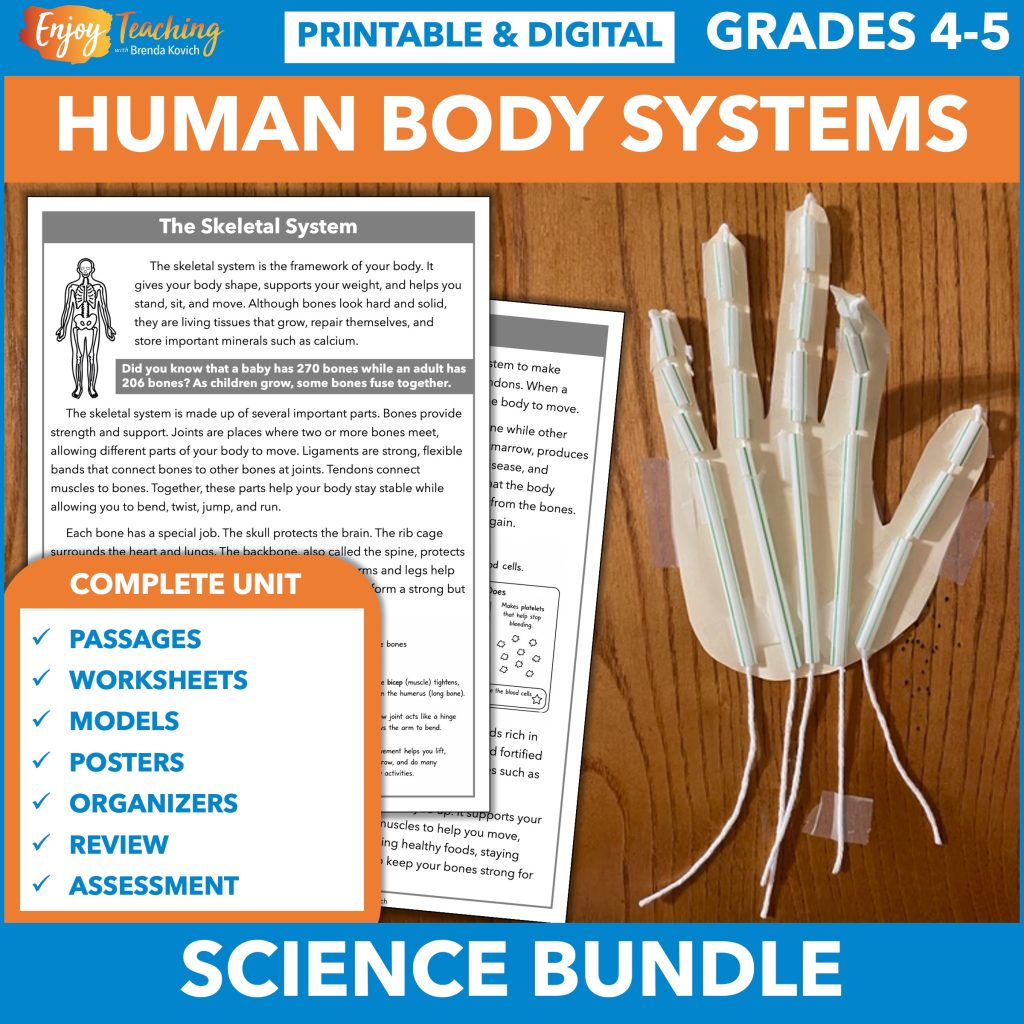
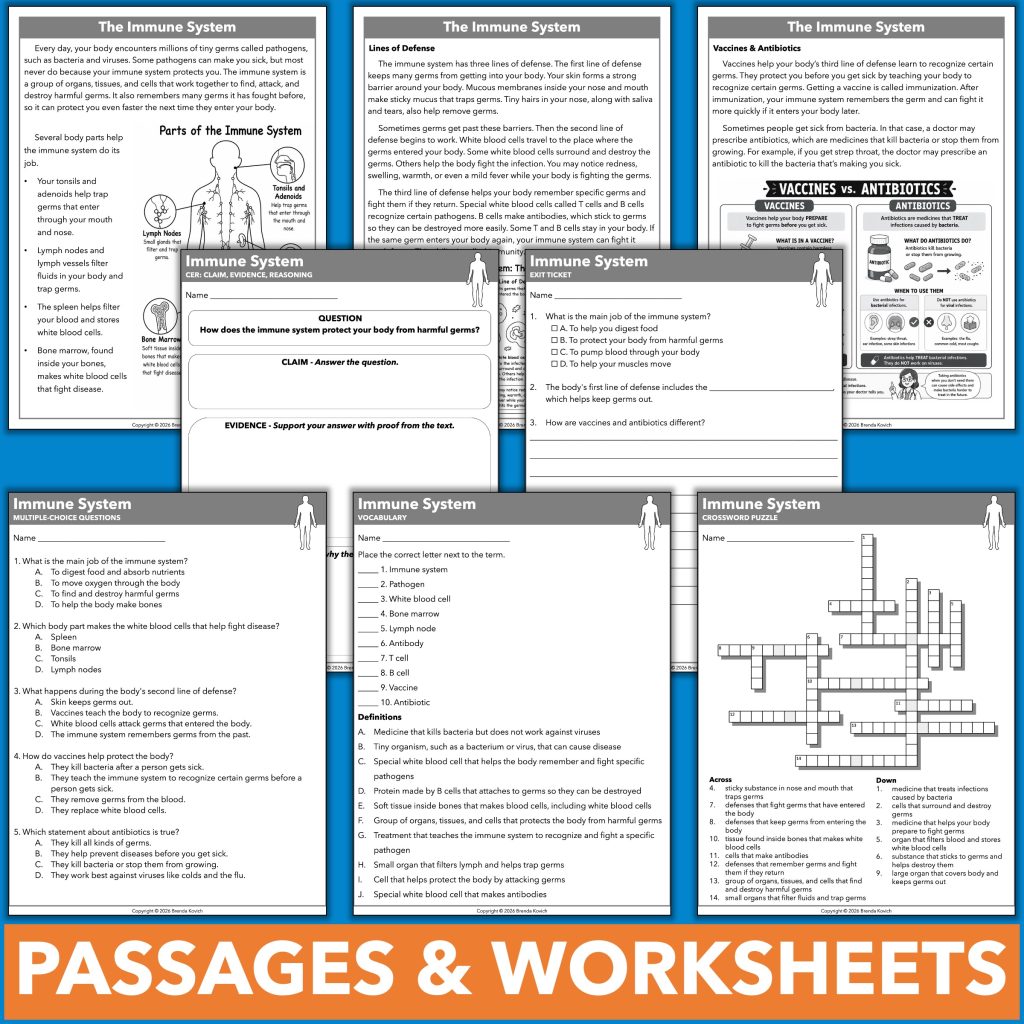
She walked back to her computer. Then she pulled up a body systems unit. “Check this out. A two-page informational text explains the circulatory system. And it’s differentiated for two reading levels. What’s more? It includes multiple-choice questions, a CER chart, an open-ended response sheet, a vocabulary worksheet, a crossword puzzle, and an exit ticket.”
Mr. Frank nodded. “Sweet,” he said. “We can reinforce reading skills while teaching science and health.”
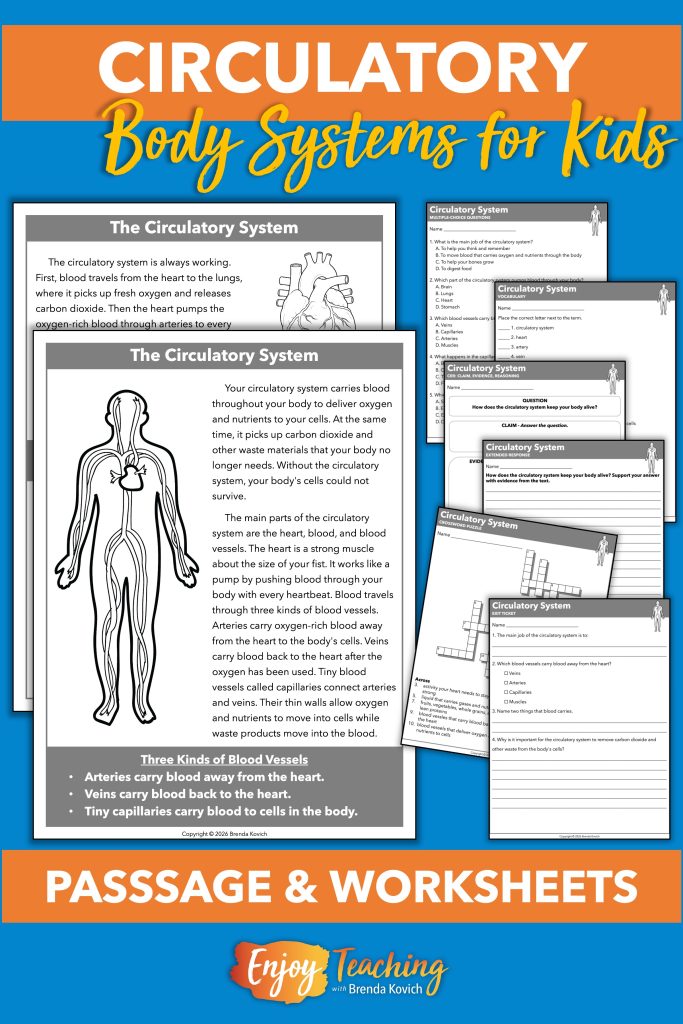
Taking Notes
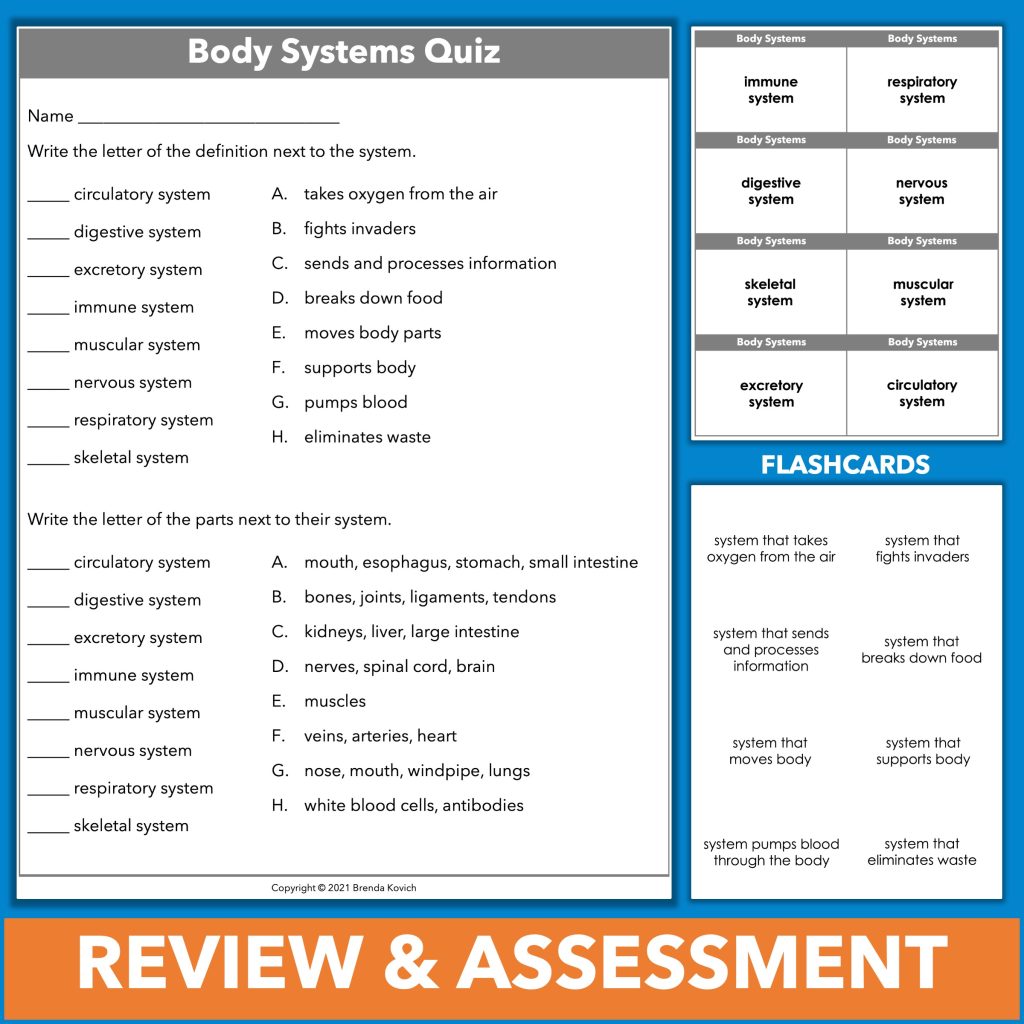
Ms. Sneed scrolled to another part in the body systems unit. “The set also offers a summary sheet for the circulatory system. We can use it as a reference guide, study sheet, or anchor chart. Avariety of graphic organizers let kids take notes,” she said. “I particularly like this one. It asks them to tell about its job and parts. Additionally, they must explore connections with other systems, as well as compare it with another type of system.”
“What do you mean?” Mr. Frank asked.
“You know, the circulatory system is like a series of pipes in your home. Or maybe the it’s like a series of connected rivers. This forces kids to think about a variety of systems and make analogies.”
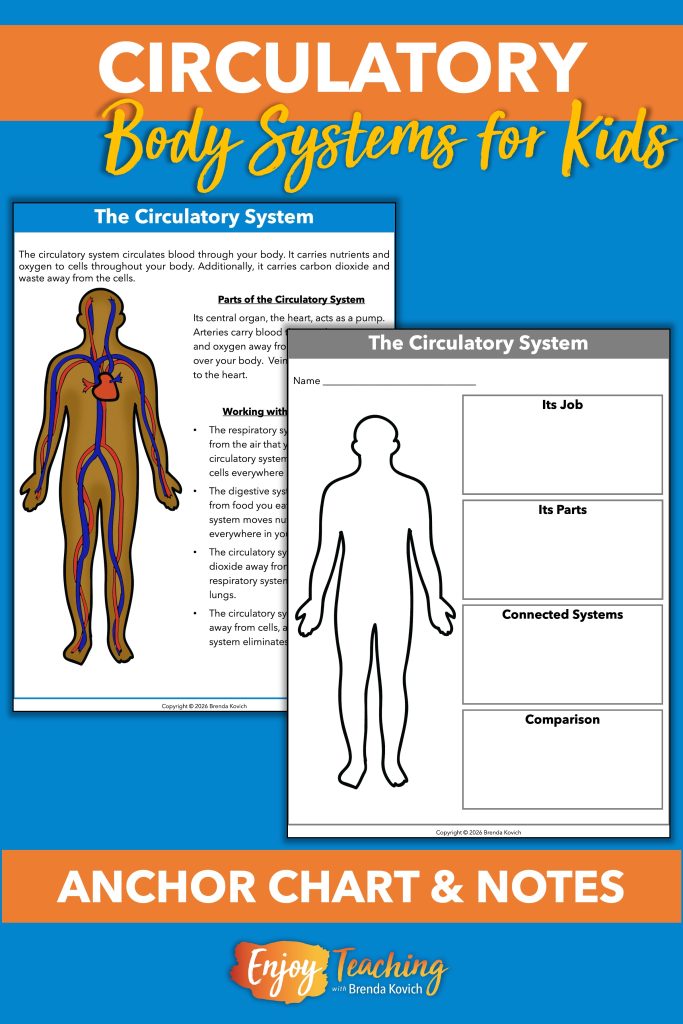
“Great for critical thinking,” her teaching partner said. “I like it.”
Enjoy Teaching Body Systems
Ms. Sneed smiled. Stuff like this always made her enjoy teaching a little more. She couldn’t wait to add these to her life science unit. Her kids would absolutely love it! Now to find some cool simulations for the digestive, immune, musculoskeletal, nervous, and respiratory systems…
Why not bring some active learning into your class? They’re sure to engage your students – and you!