How can you build a digestive system model with kids? You can use common household items to simulate the process.

Posts on this website follow a teaching journey and are written in story form.
Ms. Sneed Teaches the Digestive System
Ms. Sneed and her teaching partner sat at the side table.
“Okay, I’m ready to build more body systems models,” said Mr. Frank. “What’s next?”
“The digestive system.”
Building a Model of the Digestive System
“First,” she said, “let’s try building the digestive system model.”
“Great! I really think that these scientific models are helping my students conceptualize body systems.”
Ms. Sneed pulled up the directions. Then they gathered the materials:
- two plastic containers
- vinegar
- baggie with zip top
- paper towel
- bread or bun
- small lid or eyedropper of water
- spoon
“Okay, we’re ready to try it,” said Mr. Frank.
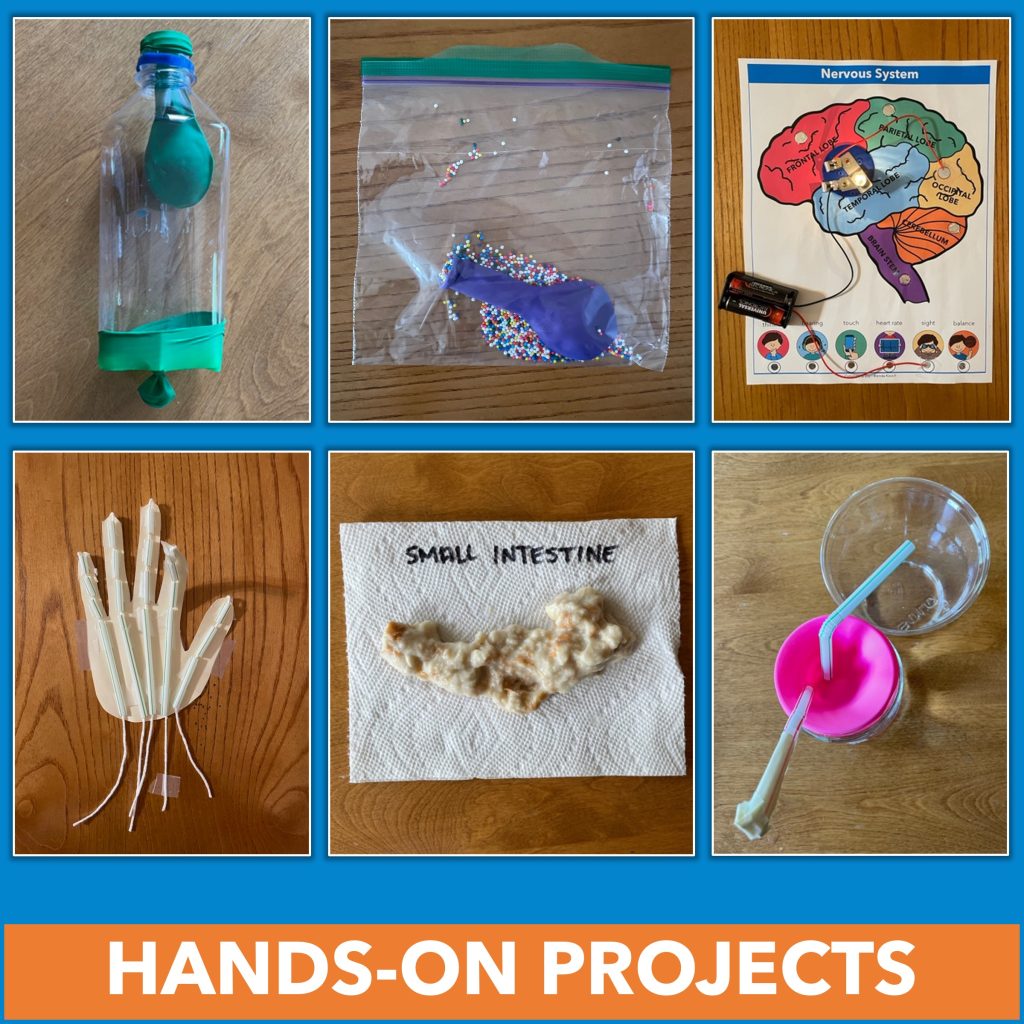
First, to simulate biting, they tore up the bread and placed it into the first container.
Second, they added the water, which represented saliva.
Third, they mashed the bread with a spoon. “Gross,” Ms. Sneed said.
Fourth, they added two teaspoons of vinegar to the baggie. “The baggie represents the stomach and the vinegar, stomach acid,” Mr. Frank explained.
Fifth, they poured the bread into the baggie. To simulate digestion, they mashed the bread through the baggie. “Super gross,” Ms. Sneed laughed.
Sixth, the teachers placed the mashed food on a folded piece of paper towel. “Here’s the small intestine,” said Mr. Frank. He rolled it up. Then he squeezed it over the second container. “Liquid filled with nutrients is absorbed into the body,” he explained.
Ms. Sneed turned a light shade of green. “Okay, I can do this!” she exclaimed.
Finally, Mr. Frank unrolled the paper towel. “Solid waste is left behind.”
Ms. Sneed perked up and stared at the mass. “Hey,” she said, “I always wondered how that happened.” Then she burst out laughing. “The kids are going to flip when they do this activity! Digestive with a little bit of excretory.”

Learning About the Digestive System
“After this activity,” said Ms. Sneed, “kids need to learn more.”
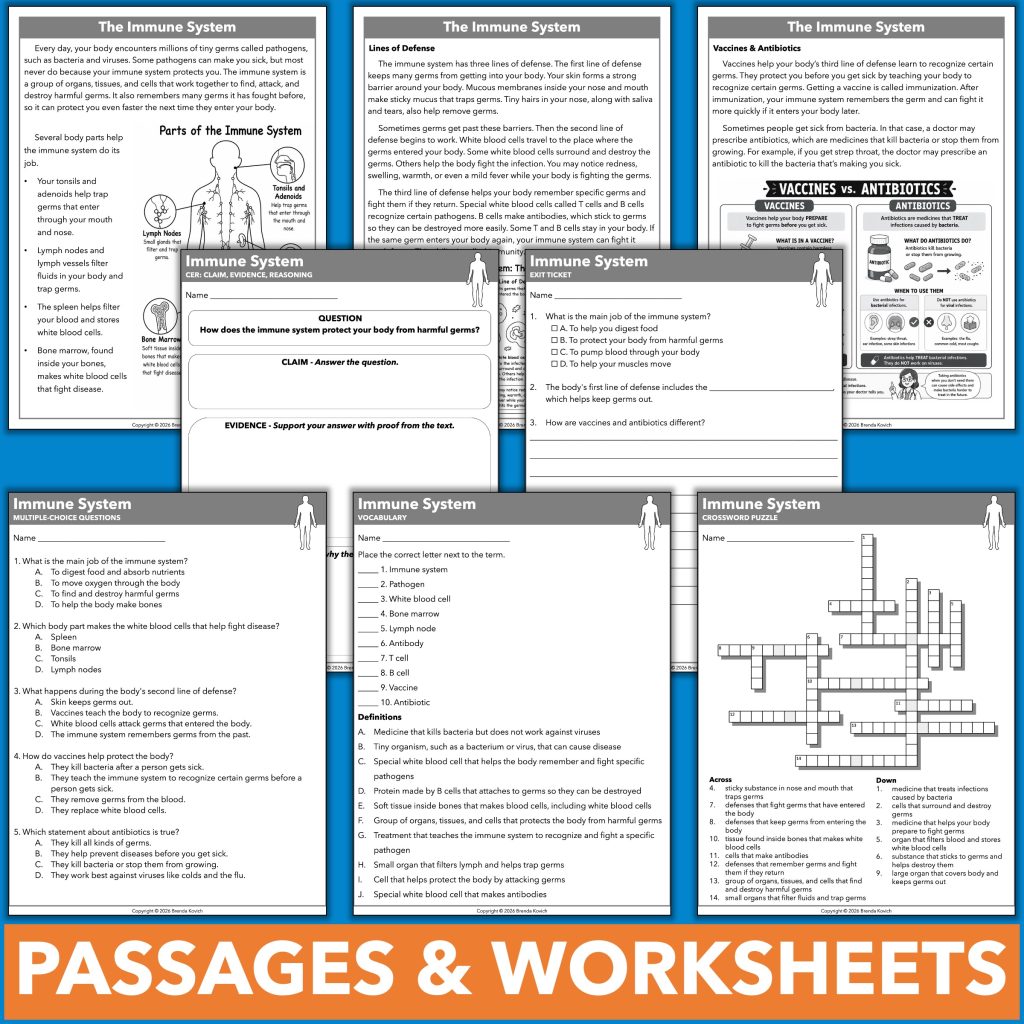
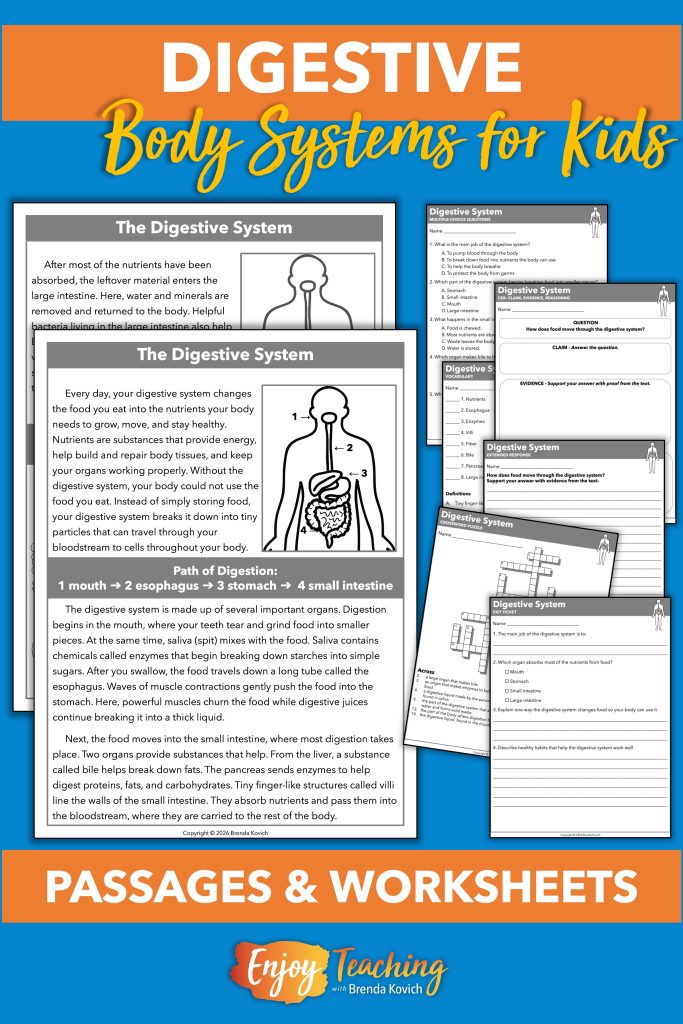
She scrolled through the body systems unit and opened the digestive system file. “This two-page informational text explains the system. And look at this! It comes with multiple-choice questions, a CER chart, an open-ended response, a vocabulary worksheet, a crossword puzzle, and an exit.”
Mr. Frank leaned in to take a closer look. “Wow, that will let us reinforce reading skills while teaching science and health.”
Taking Notes
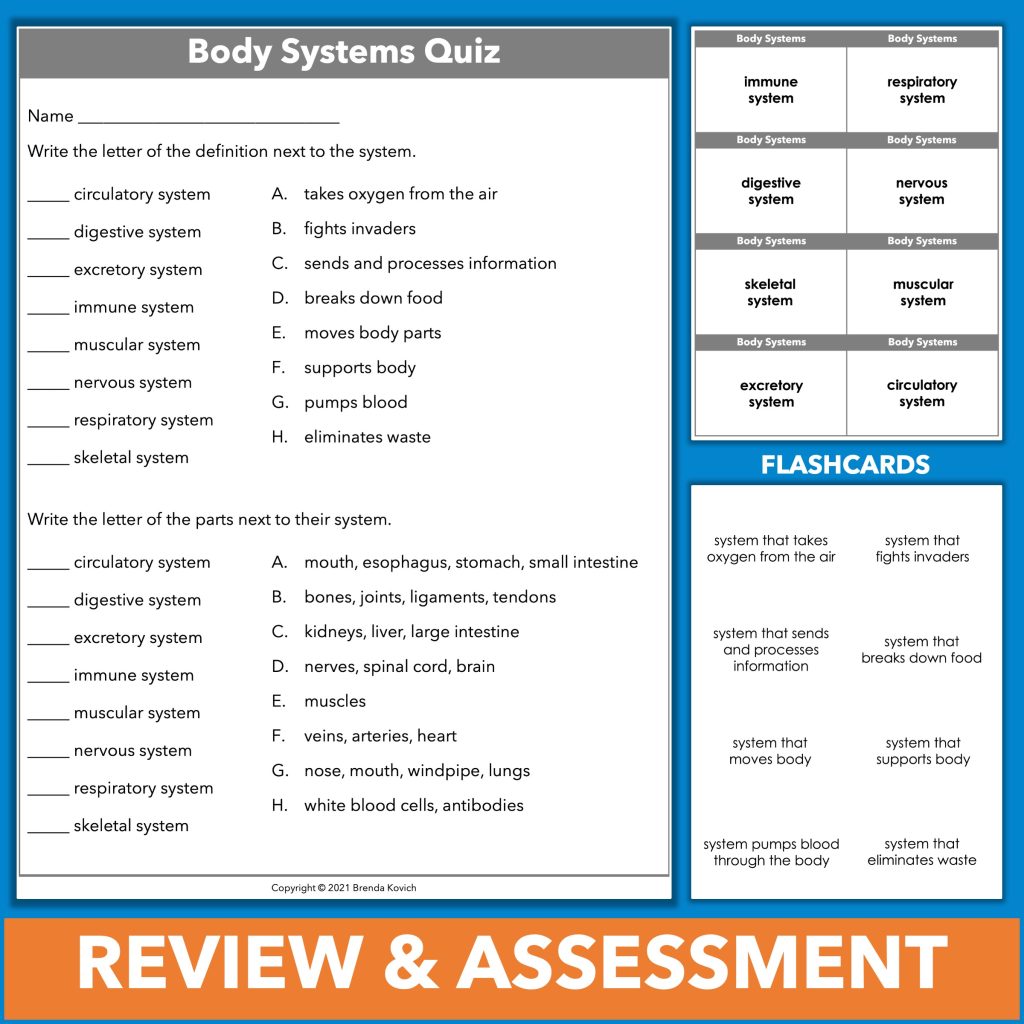
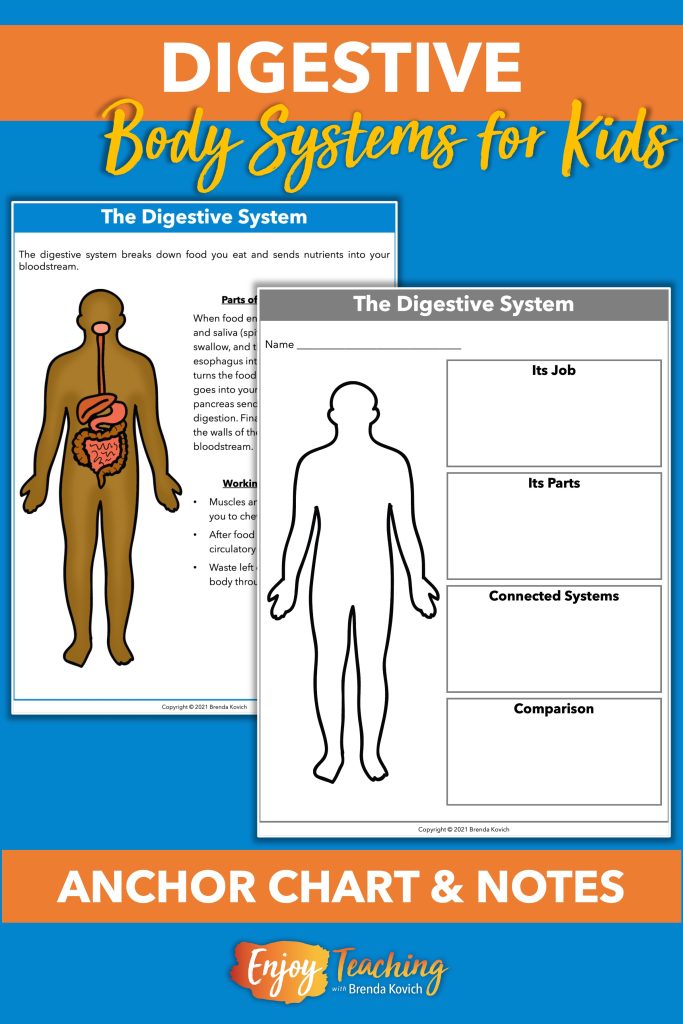
Ms. Sneed scrolled to another part of the body systems unit. “The bundle also offers a quick reference guide that we can use as an anchor chart or study guide. A variety of graphic organizers ask kids to explain the digestive system – and draw it,” she said. “I particularly like this one. It asks them to tell about its job and parts. Additionally, they compare it with another type of system.”
“What do you think they’ll compare the digestive system to?” Mr. Frank asked.
“Hard telling,” Ms. Sneed said. “To me, it’s sort of like a traditional coffee pot.”
“Huh?”
“You know, the water goes through the coffee but leaves the grinds behind.”
Mr. Frank shook his head and chuckled. “If you say so. Like you said, hard telling what they will come up with.”
Enjoy Teaching Body Systems
Ms. Sneed smiled. Activities that were a little gross and creative thinking enjoy teaching a little more. She couldn’t wait to add these digestive system activities to her life science unit. Her kids would absolutely love it! Now to find cool simulations for the circulatory, immune, musculoskeletal, nervous, and respiratory systems…
Why not bring some active learning into your class? They’re sure to engage your students – and you!